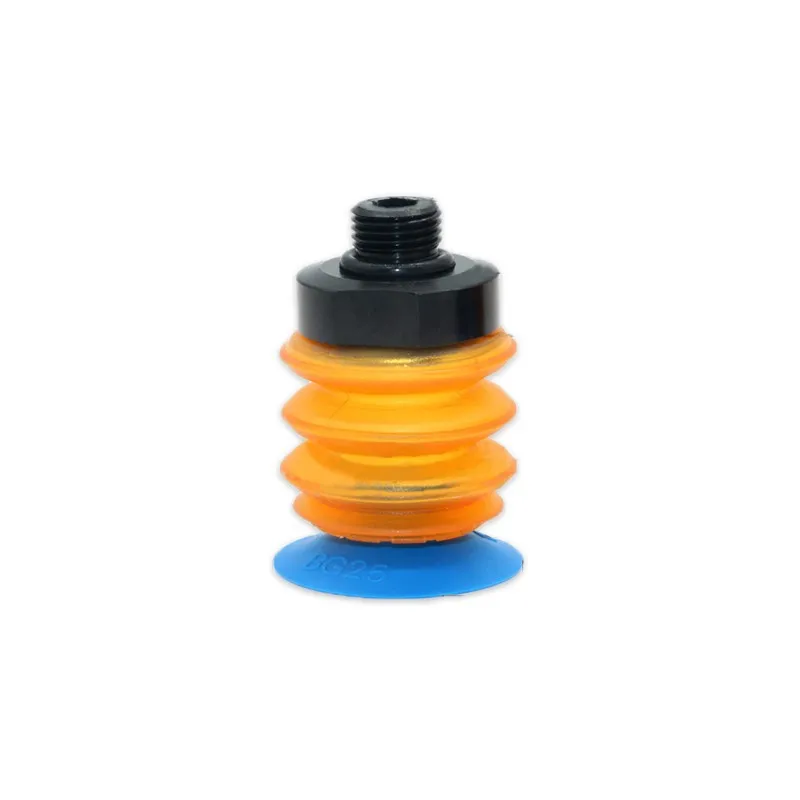
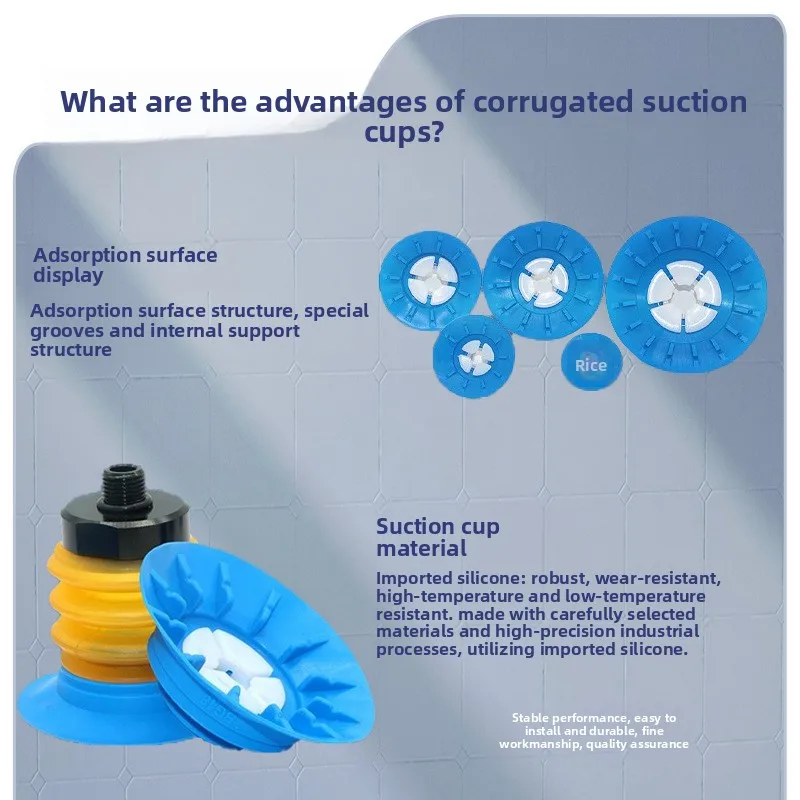
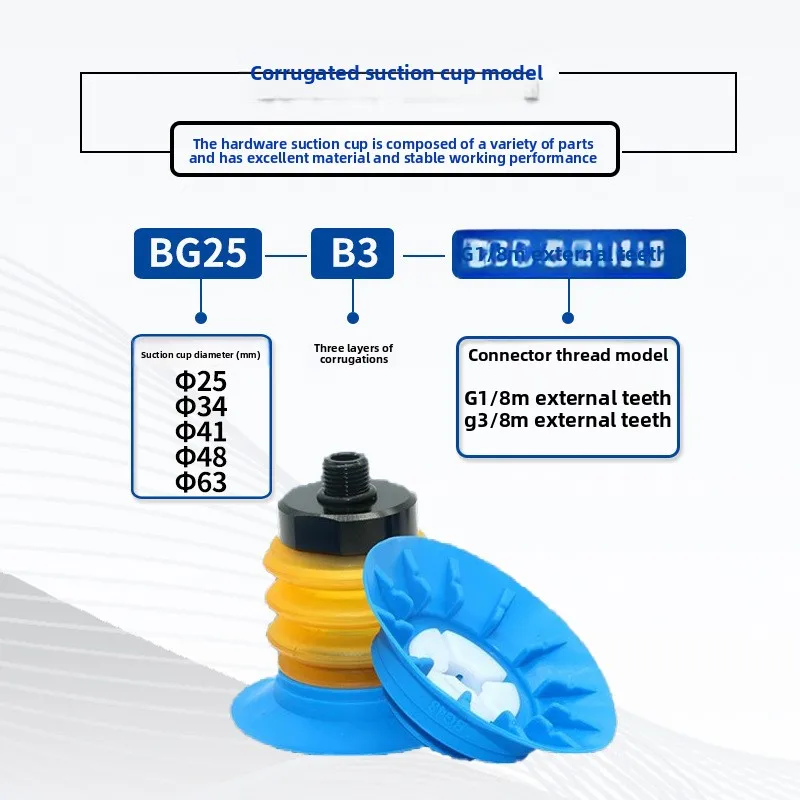
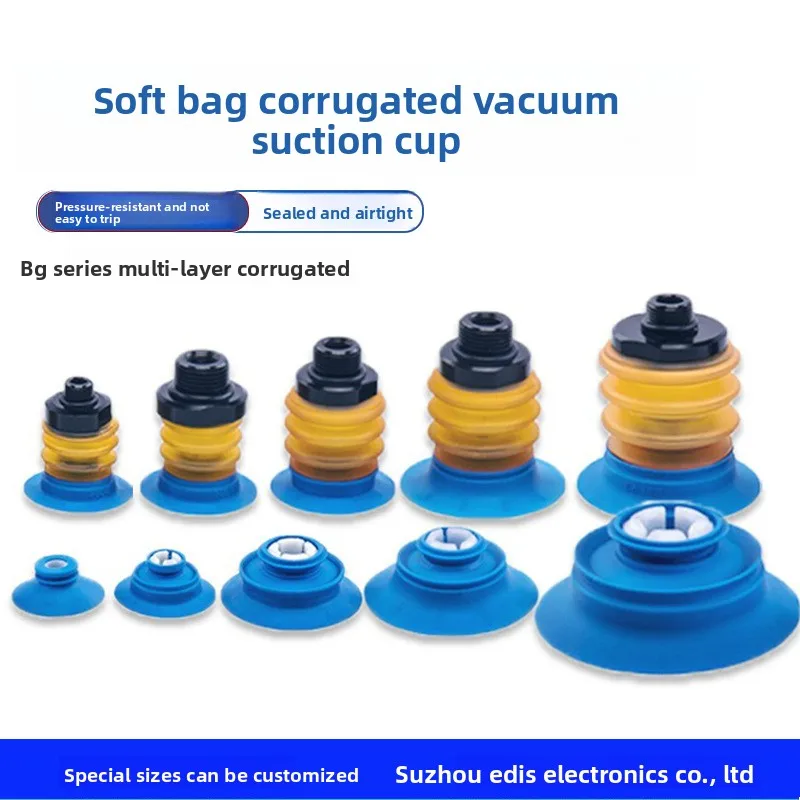
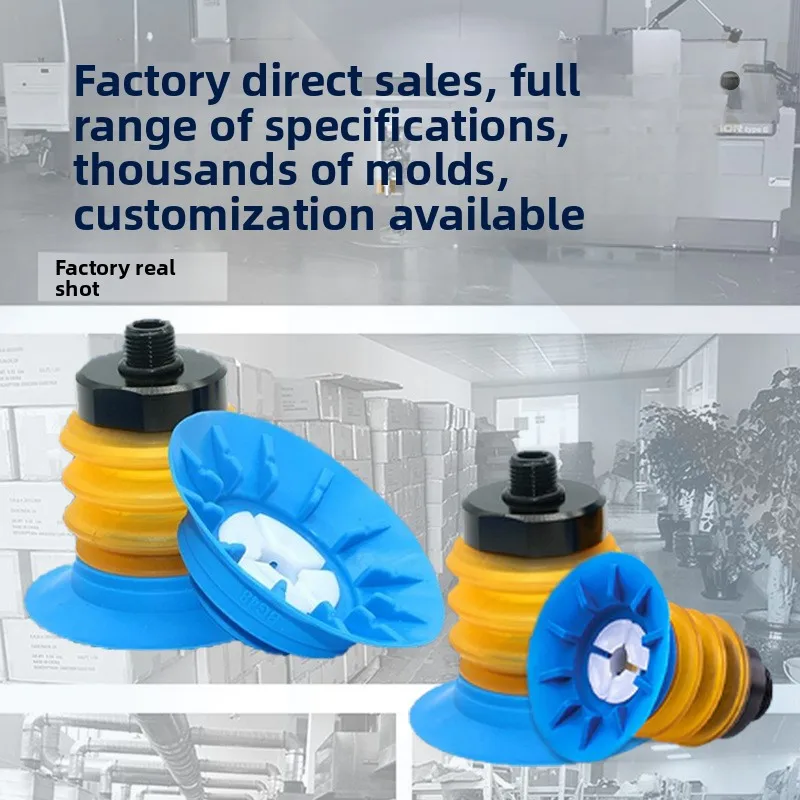
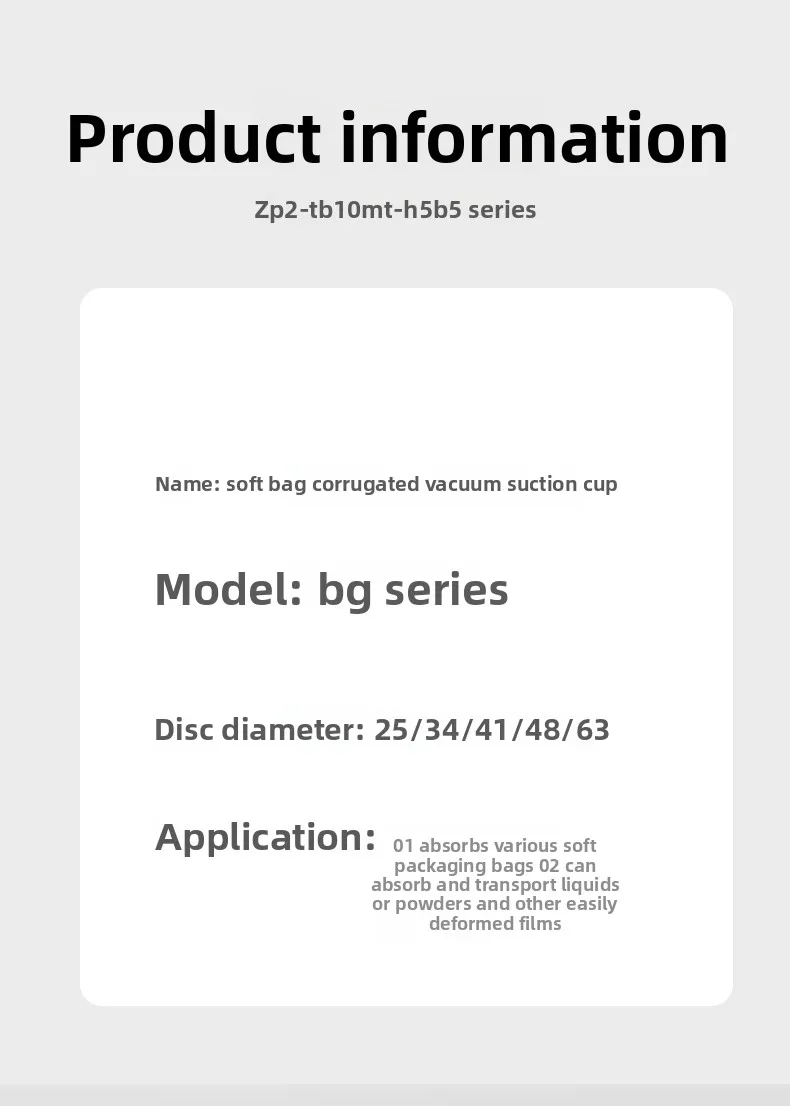
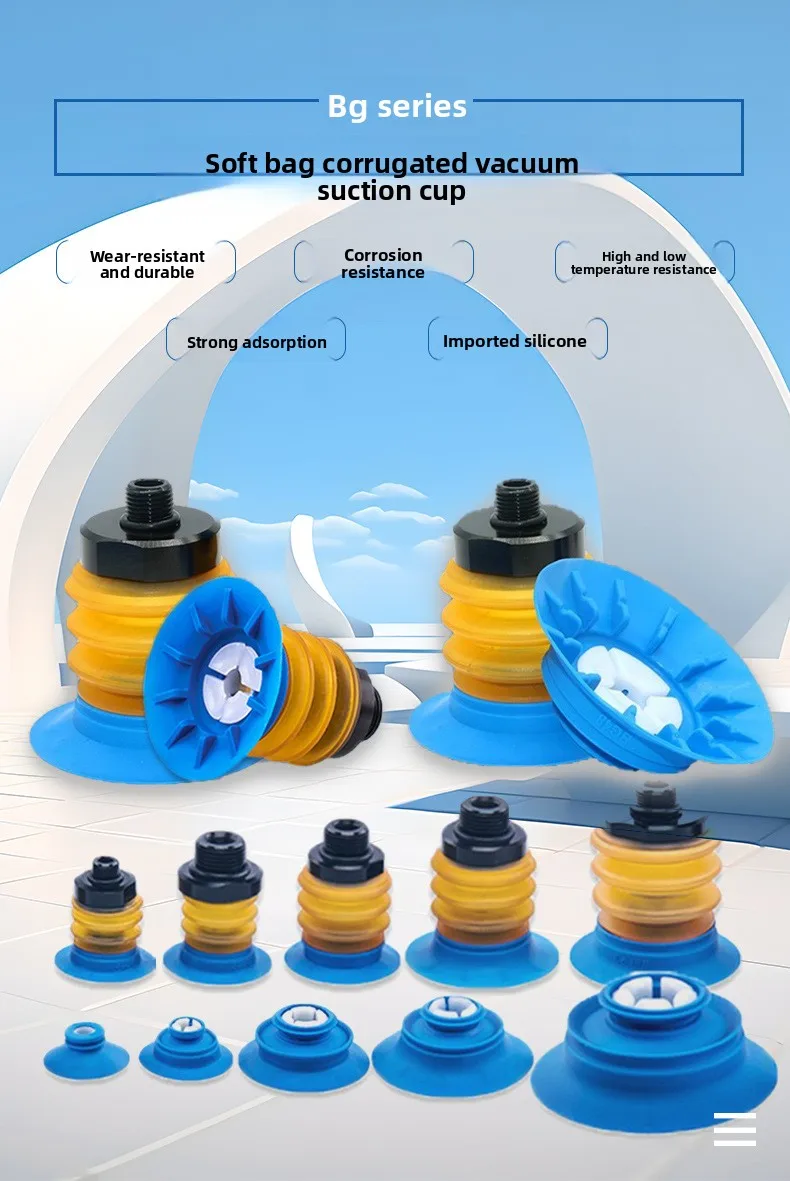
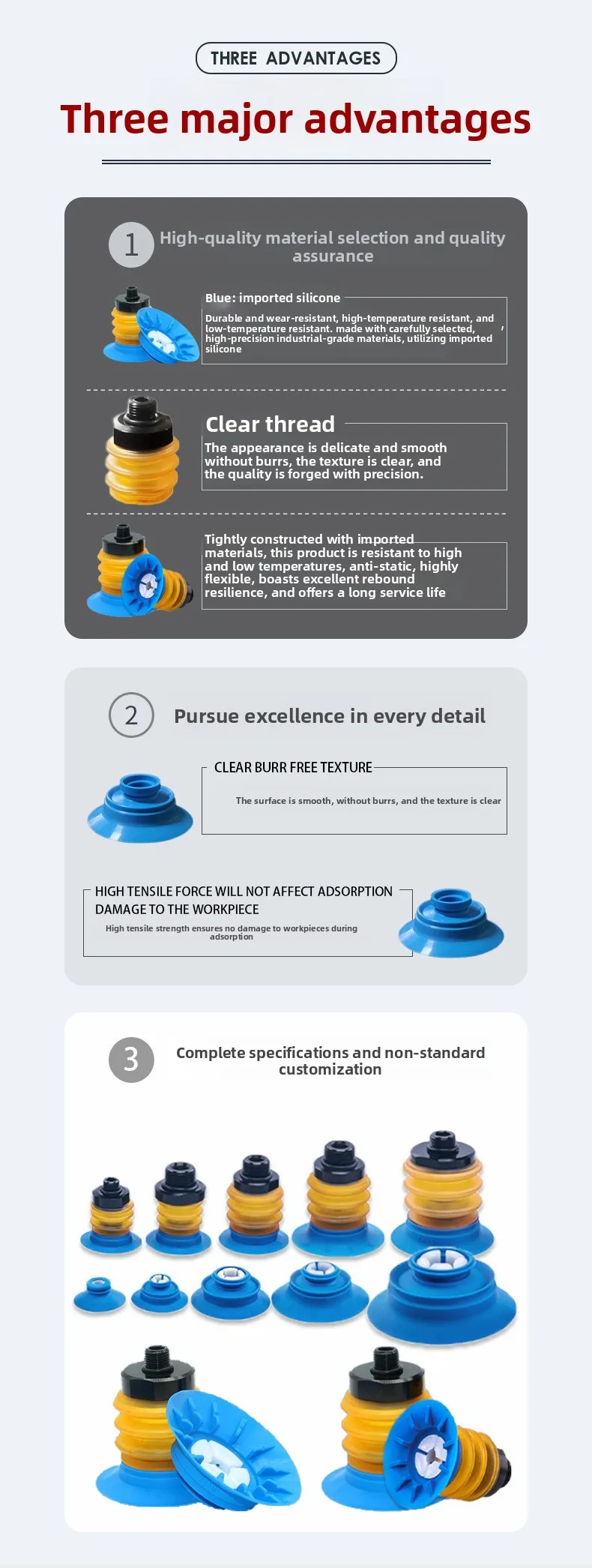
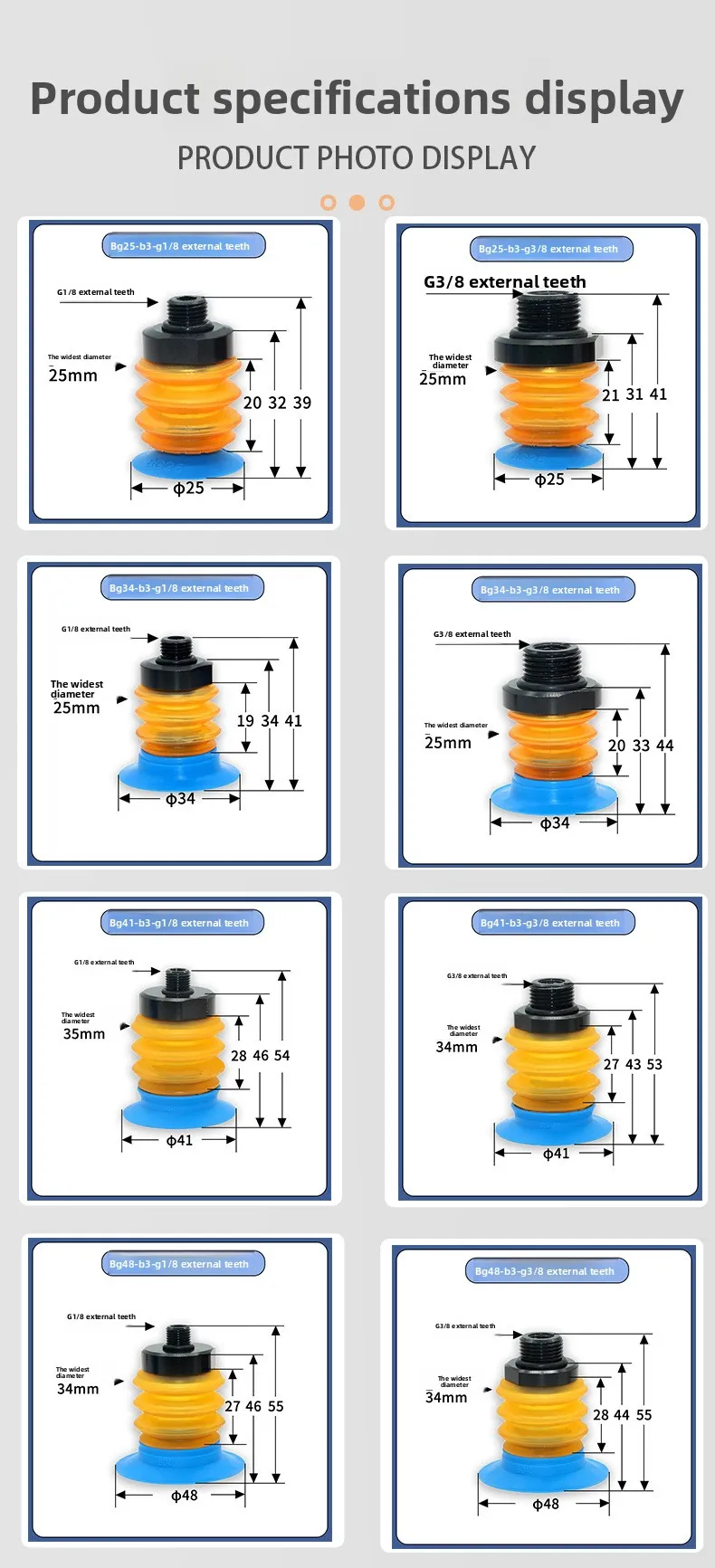
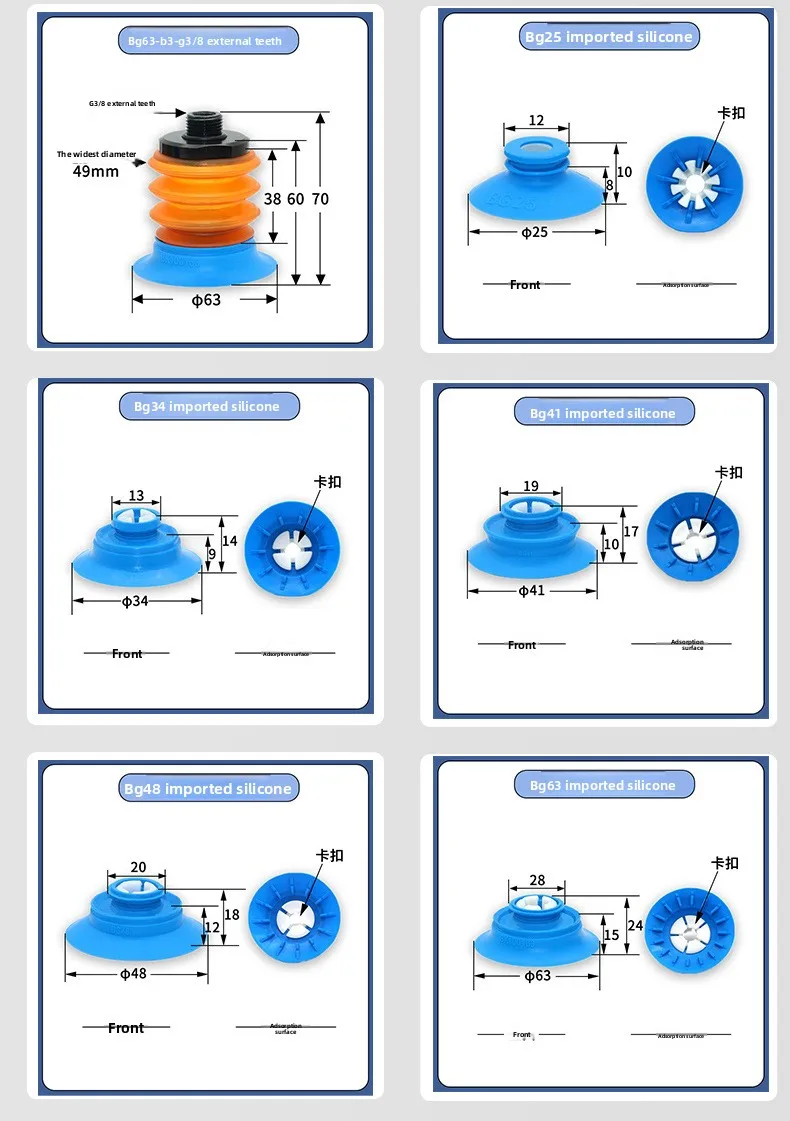
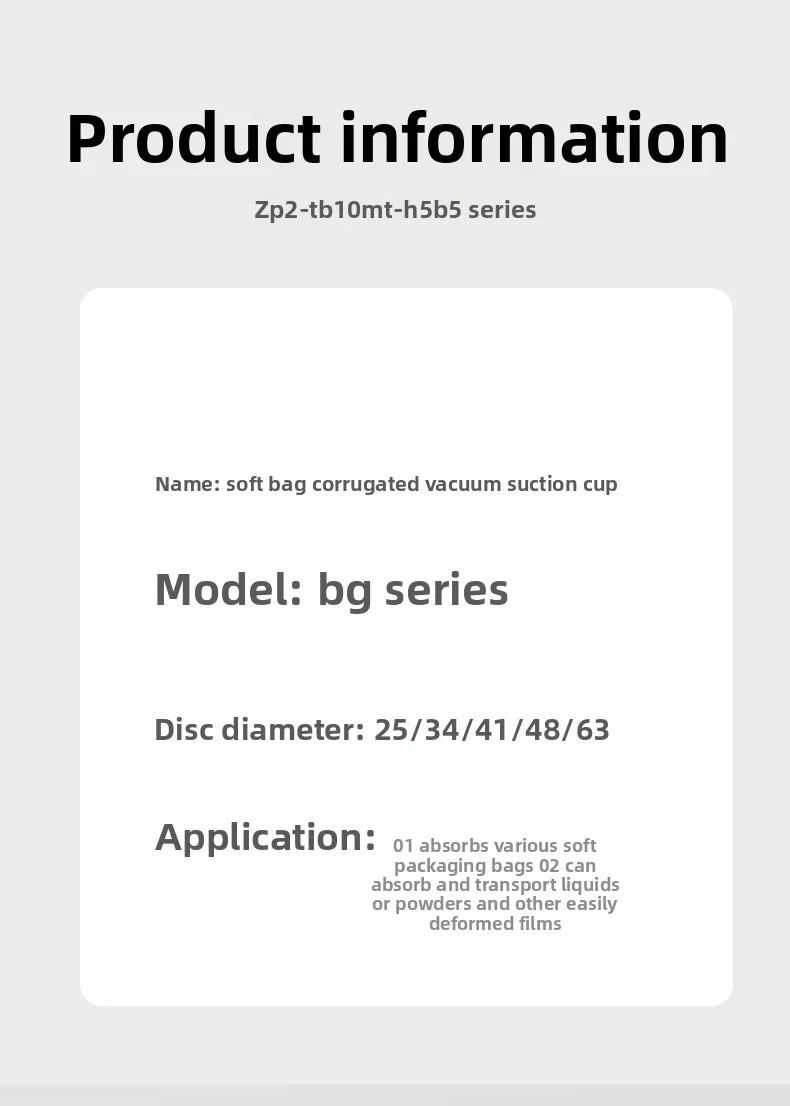
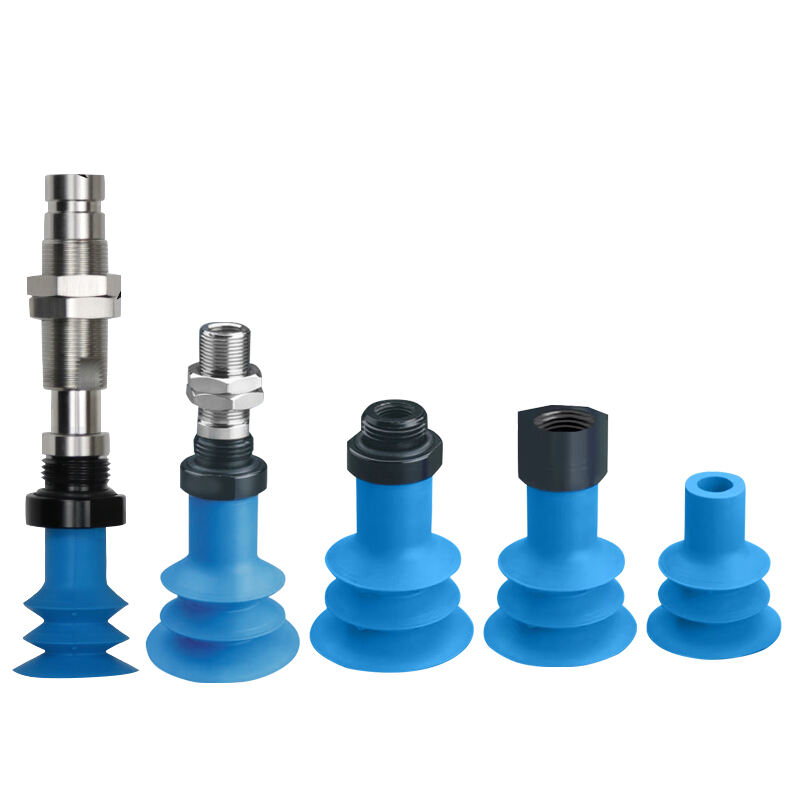
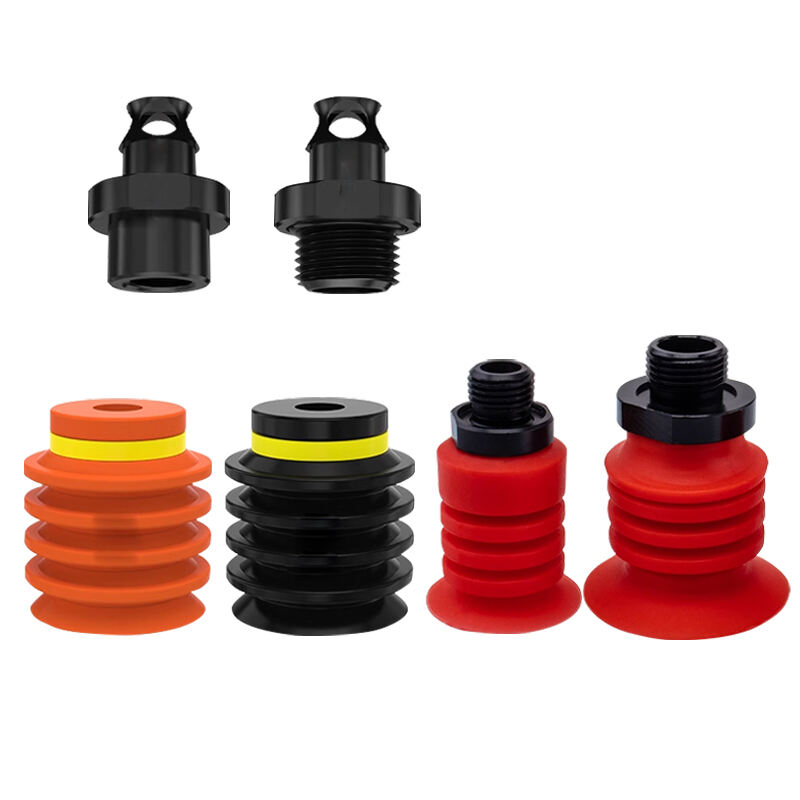
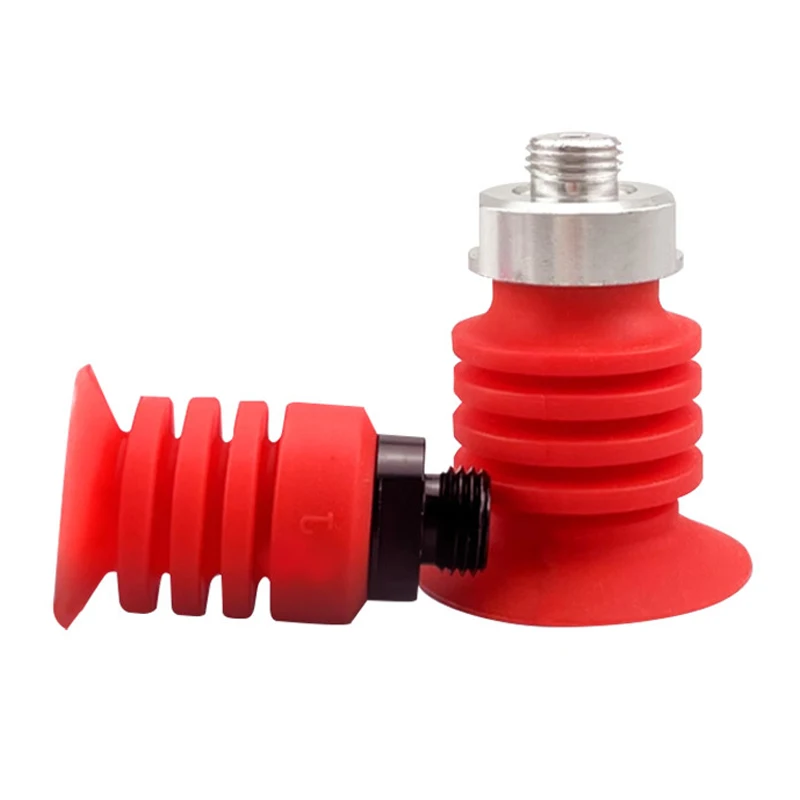
First, select the corresponding model according to packaging size and liquid filling volume: adopt BGI25S for mini thin liquid sachets and small beverage pouches; choose BG34S-38M for medium bulging sauce, milk and juice stand-up bags. Inspect the flexible plastic bag lip and bellows for cracks, aging, residual food powder and elasticity attenuation before installation.
Second, thoroughly clean the suction cup contact surface and liquid pouch outer film to remove grease, food residue and fine dust, ensuring seamless close fitting to avoid vacuum leakage and unstable grabbing.
Third, align the standard threaded interface of the PIAB suction cup with the vacuum connector of the manipulator or bag opening machine, screw and lock tightly to prevent loosening and air leakage caused by high-frequency reciprocating vibration.
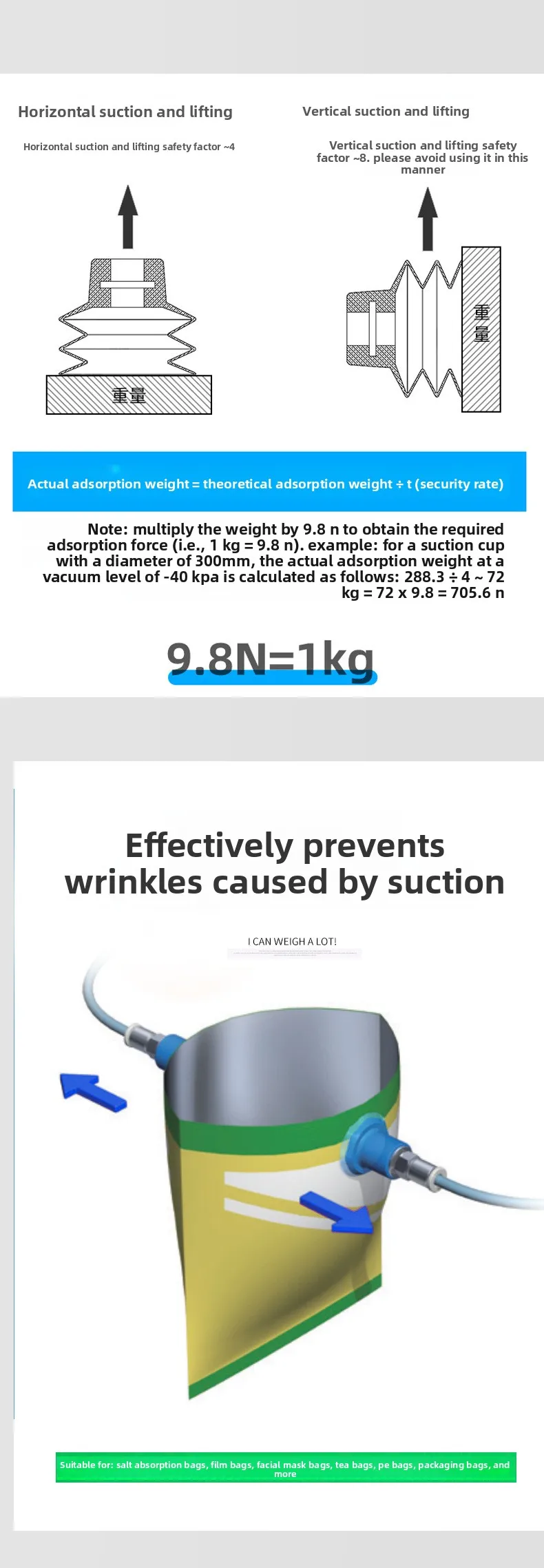
Fourth, connect the vacuum pipeline and conduct idle air tightness test, adjust the vacuum negative pressure to the recommended stable range of -40kPa, check the flexible telescopic smoothness of multi-layer bellows and no airflow blockage.
Fifth, carry out trial bag grabbing and opening operation, verify the liquid pouch is adsorbed flat without wrinkling, sagging or film indentation, confirm continuous high-speed operation without bag dropping phenomenon.
Sixth, launch formal liquid food filling automated production after passing the trial run. For daily maintenance, regularly rinse food residue on the flexible plastic lip with neutral cleaning liquid, check the tightness of the replaceable lip retainer every week, and replace the bag lip timely if wear, suction weakening or frequent film wrinkling failure occurs.
 EN
EN
 AR
AR
 BG
BG
 HR
HR
 CS
CS
 DA
DA
 NL
NL
 FI
FI
 FR
FR
 DE
DE
 HI
HI
 IT
IT
 KO
KO
 NO
NO
 PL
PL
 PT
PT
 RO
RO
 RU
RU
 ES
ES
 SV
SV
 TL
TL
 ID
ID
 SR
SR
 UK
UK
 ET
ET
 HU
HU
 TH
TH
 TR
TR
 FA
FA
 AF
AF
 MS
MS
 GA
GA
 BE
BE
 MK
MK
 AZ
AZ
 BN
BN
 LA
LA
 UZ
UZ
 HAW
HAW
 KY
KY